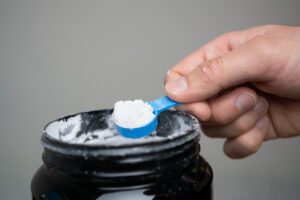
What’s not to like about creatine? It’s a naturally occurring nutrient, your body needs it, and it appears safe for most people when taken as a supplement. Muscles use it as an energy source during exercise and recovery, and it is also taken up in the heart and brain. Creatine supports mitochondrial stability and antioxidant defenses. Though it isn’t a peptide, it is made from amino acids, so the usual sources in the diet are animal proteins (meat, fish, dairy). Only about half of daily creatine use is from food, the remainder being synthesized in the liver, kidneys, and pancreas. Contact us to learn more about why creatine is a no-brainer for fitness and brain health.
Creatine and the Muscle-Brain Axis
There are numerous studies validating the role of creatine in augmenting athletic performance and strength. When combined with resistance training, creatine significantly improves lean body mass and functional capacity, especially in older adults. There is also evidence that it improves cognition, with measurable improvements seen in standard measures of memory, processing speed, and executive function.
Exercise is known to promote neuroplasticity through signaling proteins and peptides called myokines, which are released by muscle cells during contraction. Myokines act as messengers to communicate with other organs, especially the brain. They have anti-inflammatory and anti-cancer effects in addition to promoting tissue repair generally. This myokine communication loop is known as the muscle–brain axis. Because creatine is consumed in the brain as well as muscles, this synergistic crosstalk could explain the benefits of creatine seen in clinical studies.
How Do Creatine Supplements Help?
As with all supplements, it is important to distinguish between replacing what may be lacking in the diet – a deficiency state – and what the effects are of taking more than what is necessary for health. In the case of creatine, higher dietary intake is associated with reduced biological age acceleration; the question is whether supplements do more. Most studies tend to show the biggest improvements in individuals with lower baseline creatine levels to start with. Whether or not boosting creatine affects aging directly, it does help to counteract the manifestations of aging on the brain, muscle, and skin. It is generally recommended to take it before or after exercise, though I think daily use makes sense even for rest days. Creatine supplements have near 100% bioavailability, so it gets to the tissues efficiently and loading doses when first starting do not appear to be necessary.
Call Us To Learn More About the Benefits of Creation for Fitness and Brain Health
If you are considering taking creatine supplements or are just wondering how creatine works, reach out to us today to learn why creatine is a no-brainer for fitness and brain health.